


There's a moment every gambler knows. You're watching the reels slow down, or the river card flip, or the ball bounce one more time, and your whole body tenses like you're about to catch a game-winning touchdown pass. Except you're sitting in a chair, holding a phone, and the only person who can actually tackle you is yourself. That feeling—half terror, half electricity—is why the iGaming industry pulled in over $100 billion globally last year. But here's the thing nobody puts on a billboard: the feeling isn't the problem. The problem is what you do with it.
I've spent years watching people bet, win, lose, and lie about all three. Let me tell you what actually separates the folks who enjoy this world from the ones who get chewed up by it. It's not luck. It's not even discipline, not exactly. It's something closer to a specific, unglamorous set of habits that nobody posts about on Instagram.
RTP Is Not a Promise, It's a Long-Term Average
Every slot machine on the planet has a Return to Player percentage. A 96% RTP slot pays back 96 cents for every dollar wagered—but not to you, and not today. That number is calculated over millions of spins, across thousands of players, sometimes over years. If you sit down at a 96% RTP game with $100, you are not statistically entitled to $96 back. You are entitled to exactly what the random number generator decides, which could be $0 or $2,000.
This is where most new players get twisted. They see "96% RTP" and think the game owes them. It doesn't. What the RTP actually tells you is how fast your money will bleed out on average. A 94% RTP slot chews through your bankroll roughly twice as fast as a 96% one over a long session. That's the practical takeaway.
Here's a quick cheat sheet for slots with decent RTP that are widely available:
- Blood Suckers — around 98%, ancient but still one of the highest on the market
- 1429 Uncharted Seas — roughly 98.6%, a standout for Thunderkick
- Book of 99 — about 99%, which is almost absurd for a modern slot
- Mega Joker — 99% in its high-mode, though it's a weird hybrid game
Most branded slots, the ones with the movie tie-ins and the cartoon characters, sit closer to 94% or 95%. They're paying for the license. You're paying for the license. Know which bucket you're playing in.
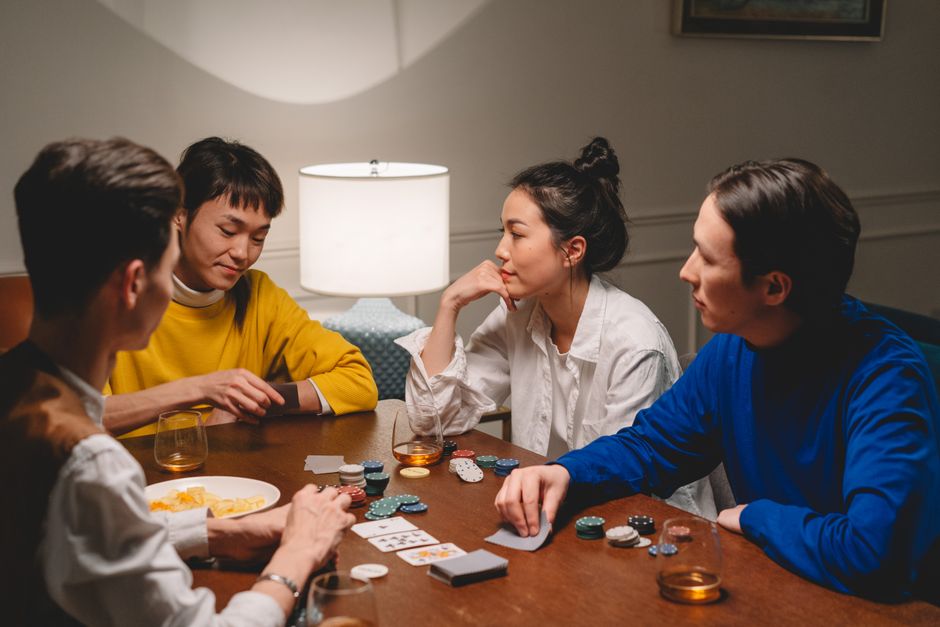
Poker Is the Only Game Where You Can Actually Have an Edge
Let's be blunt: against a slot machine or a roulette wheel, you have zero long-term edge. None. The math is fixed, the house cut is baked in, and the only variable is how long you last. Poker is different. In poker, you're playing against other humans, and the house just takes a rake. That means a skilled player can genuinely beat the game over time. Those comparing choices often turn to MANCLUB.
But "skilled player" is doing a lot of work in that sentence. The gap between a break-even poker player and a winning one is brutally thin. At low stakes, the rake eats most of the profit. You need to be better than the rake plus the field, and the field at $1/$2 online is full of people who have watched the same YouTube videos you have.
Three things actually move the needle in poker:
- Position awareness. Playing fewer hands from early position and more from the button is worth more than any flashy bluff.
- Bankroll management. You need at least 20 buy-ins for cash games and 50–100 for tournaments. Anything less and variance will bury you.
- Game selection. The single most underrated skill. A mediocre player at a soft table beats a great player at a tough one.
If you're not tracking your win rate in big blinds per 100 hands, you're not really playing poker. You're gambling and calling it strategy.
Sports Betting: Line Shopping Is Free Money
The single easiest way to improve your sports betting results costs nothing and takes about five minutes. It's called line shopping. Different sportsbooks offer different odds on the same event, and the gap is often 3 to 5%. A -110 line at one book might be -105 at another. If you're betting $500 a week, that difference is hundreds of dollars a year, just handed back to you for being mildly organized.
Sharp bettors also understand closing line value. If you bet a team at +150 and the line closes at +130, you got the better number, and over hundreds of bets, that's a stronger predictor of long-term profit than whether any individual bet won. Track it. It'll humble you fast, but it'll also teach you more than any tipster ever will.
And a hard truth: parlay betting is a tax on the impatient. The house edge compounds with every leg you add. A two-leg parlay at standard odds carries roughly a 5% hold. A five-leg parlay can push past 15%. Fun? Sure. Profitable? Almost never. This is explained well on MAN CLUB.
The Boring Stuff That Actually Protects You
Nobody wants to hear this part, which is exactly why it matters. Set a loss limit before you start, not during. Decide how much you're willing to lose in a session, write it down, and when it's gone, you're done. The industry calls this responsible gambling. I call it not being an idiot.
A few practical guardrails:
- Use deposit limits built into the casino or sportsbook. They're usually a real, hard stop.
- Never chase losses in the same session. The math doesn't change because you're angry.
- Take breaks. A 24-hour cooling-off period can be triggered by most regulated operators.
- Separate gambling money from rent money at the account level, not just mentally.
The house edge is a slow tax. It works best on people who don't know it's coming.
Why Bonuses Are Rarely as Good as They Look
That 100% match bonus up to $500 sounds great until you read the wagering requirement. Forty times the bonus amount means you need to bet $20,000 before you can withdraw a cent. At a 96% RTP slot, the expected cost of clearing that requirement is around $800. You're not being given $500. You're being given a lottery ticket with a price tag attached.
Free spins are usually better because the wagering requirement is lower, but the per-spin value is often a dime. Do the math before you get excited. The operators have already done theirs.
The Takeaway Nobody Wants to Hear
iGaming is entertainment, not an investment strategy. The moment you treat it as a way to make money, you've already lost the mental game, and the math will follow. Play games you actually enjoy, at stakes you can shrug off, with limits you set before the adrenaline kicks in. If you happen to be a genuinely skilled poker player or a disciplined sports bettor who shops lines and tracks closing value, there's a slim edge out there for you. For everyone else—and that's most of us—the goal is simple. Have fun, know the price of the ticket, and walk away while it's still a choice.


Leave a reply